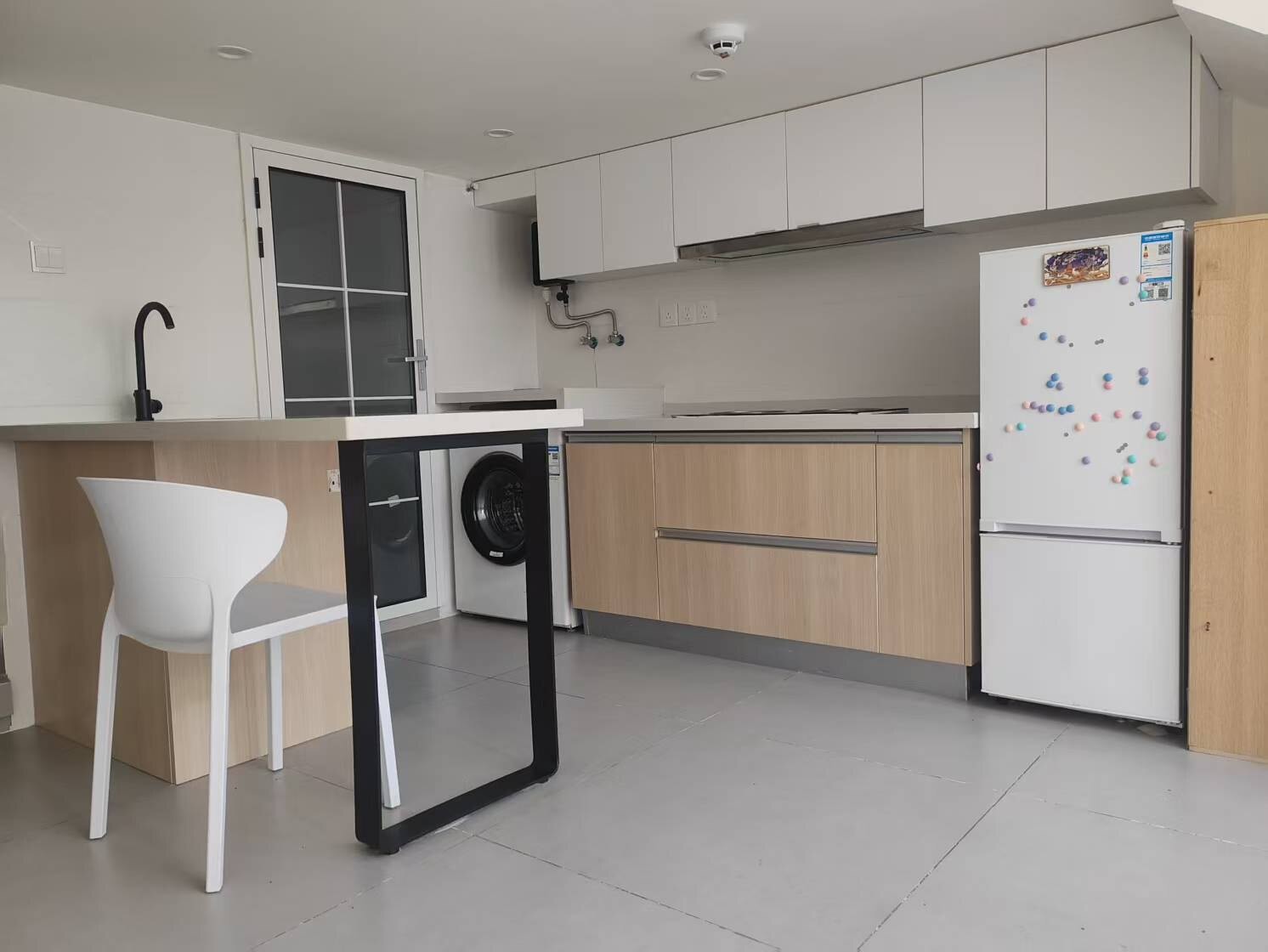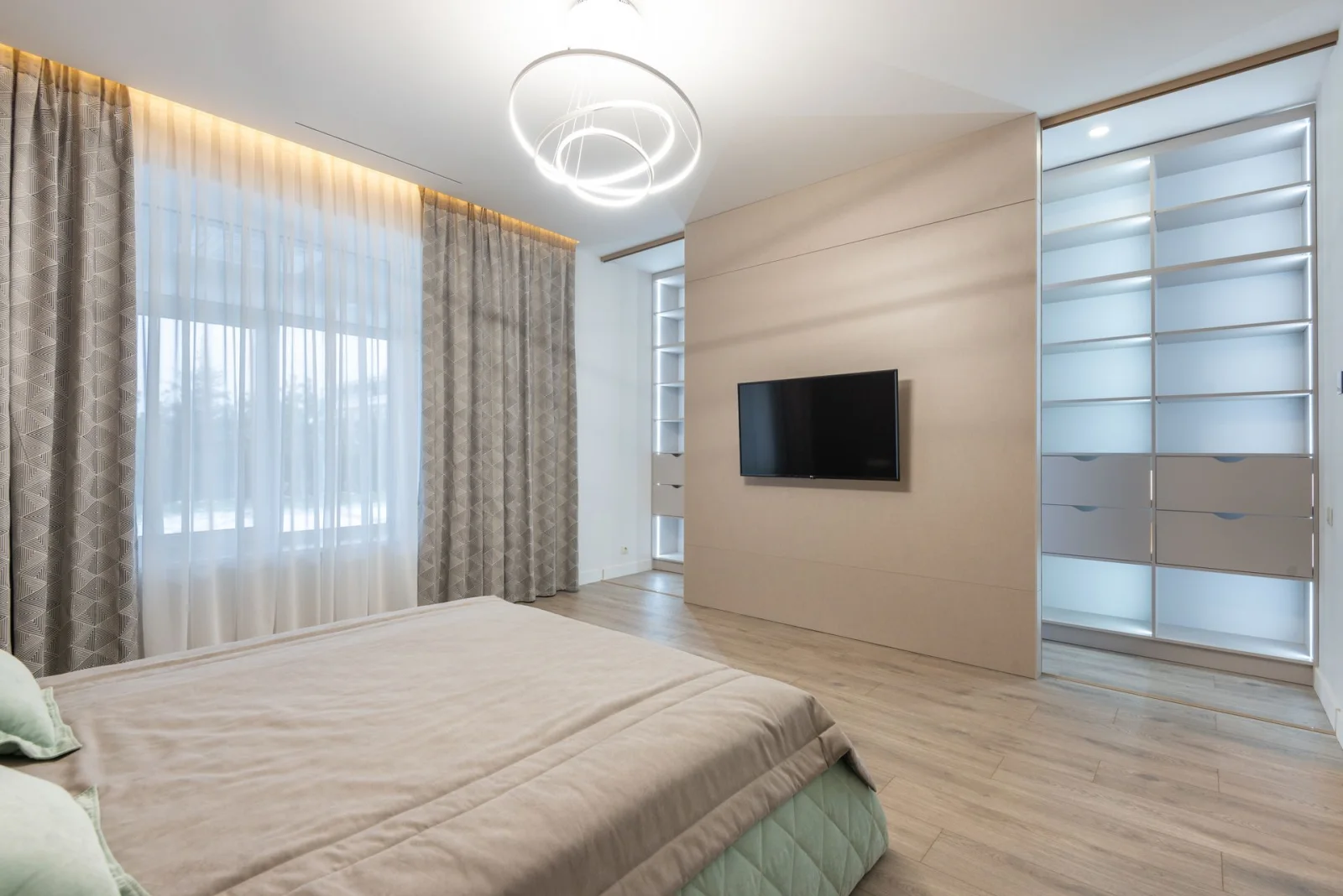
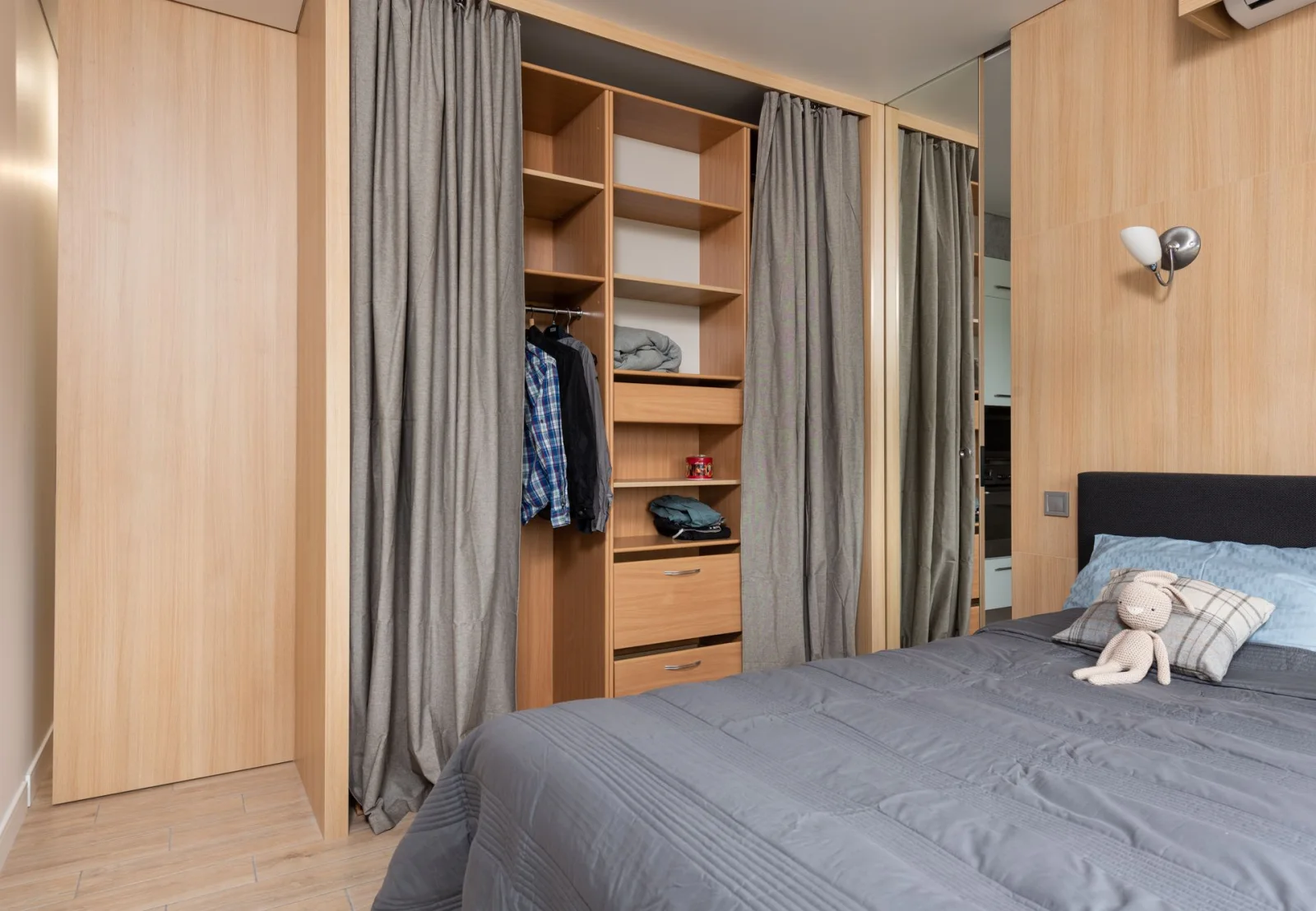
A stack of towels and a row of heavy books call for different construction. Decide what a shelf will hold before choosing how many shelves to add.
Long spans need attention
With the same material, a longer shelf behaves differently under load. An “18 mm” label alone does not guarantee freedom from sagging. Consider depth, material, weight distribution and fixings. Heavy contents may call for an additional support or a divided compartment.

Adjustable or fixed
Adjustable shelves let you change storage heights. Fixed elements may contribute to cabinet rigidity when designed that way. Do not remove a shelf without checking its role: similar-looking parts can serve different purposes.
Distribute the contents
Keep heavy objects in an accessible lower zone if the structure supports them. Avoid concentrating all weight at the middle of a long shelf. Show books, equipment or crockery during planning so the design reflects actual use.
Keep this checklist
Check before ordering
- Contents and weight are understood
- Span and supports are agreed
- Fixed structural elements identified
How many kilograms can a shelf support?
There is no universal number. Material, dimensions, fixings and load distribution must be checked for the particular design.