A door should open easily and close without a bang. That simple experience depends on hinge selection, correct drilling and adjustment after installation.
Soft close slows the final movement
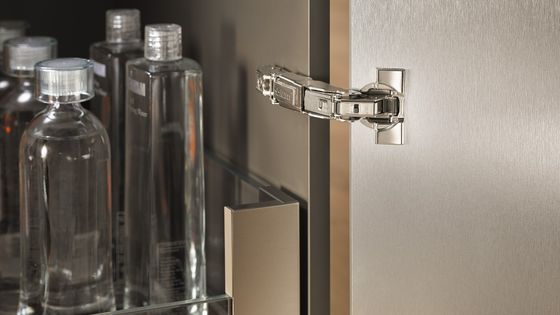
CLIP top BLUMOTION integrates soft closing into the hinge cup. It slows a closing front. It does not straighten a cabinet or correct an incorrect gap: check the cabinet geometry first, then adjust movement.
Front size and weight matter
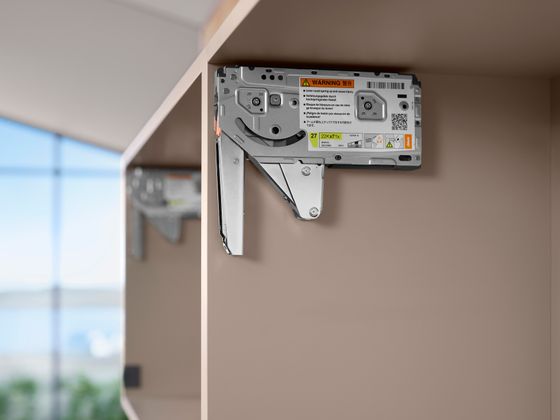
Choose hinge type and quantity for the front and manufacturer guidance. A tall heavy door and a small light one need different solutions. Check opening angle and neighbouring walls; a wide angle helps only where there is room for it.
Check the installed cabinet
Open the door several times and release it from different positions. Check for rubbing edges, uneven gaps and collisions with adjacent handles. Ask how adjustment works and keep the model reference for future service.
Keep this checklist
Check before ordering
- Selected for front weight
- No opening collisions
- Even gaps after adjustment
Are all soft-close hinges alike?
No. Geometry, opening angles, fixings and application limits vary. Compare specific models.