Water, cleaning products and plumbing connections meet beneath the sink. A good cabinet starts with service access, not a promise that the material can withstand anything.
Map the pipes before the shelves
Traps, valves and filters occupy real space. Designing the perfect drawer first can leave no room for services. Identify the equipment and preserve access for filter replacement, hose inspection and shutting off the water.
Check every opening
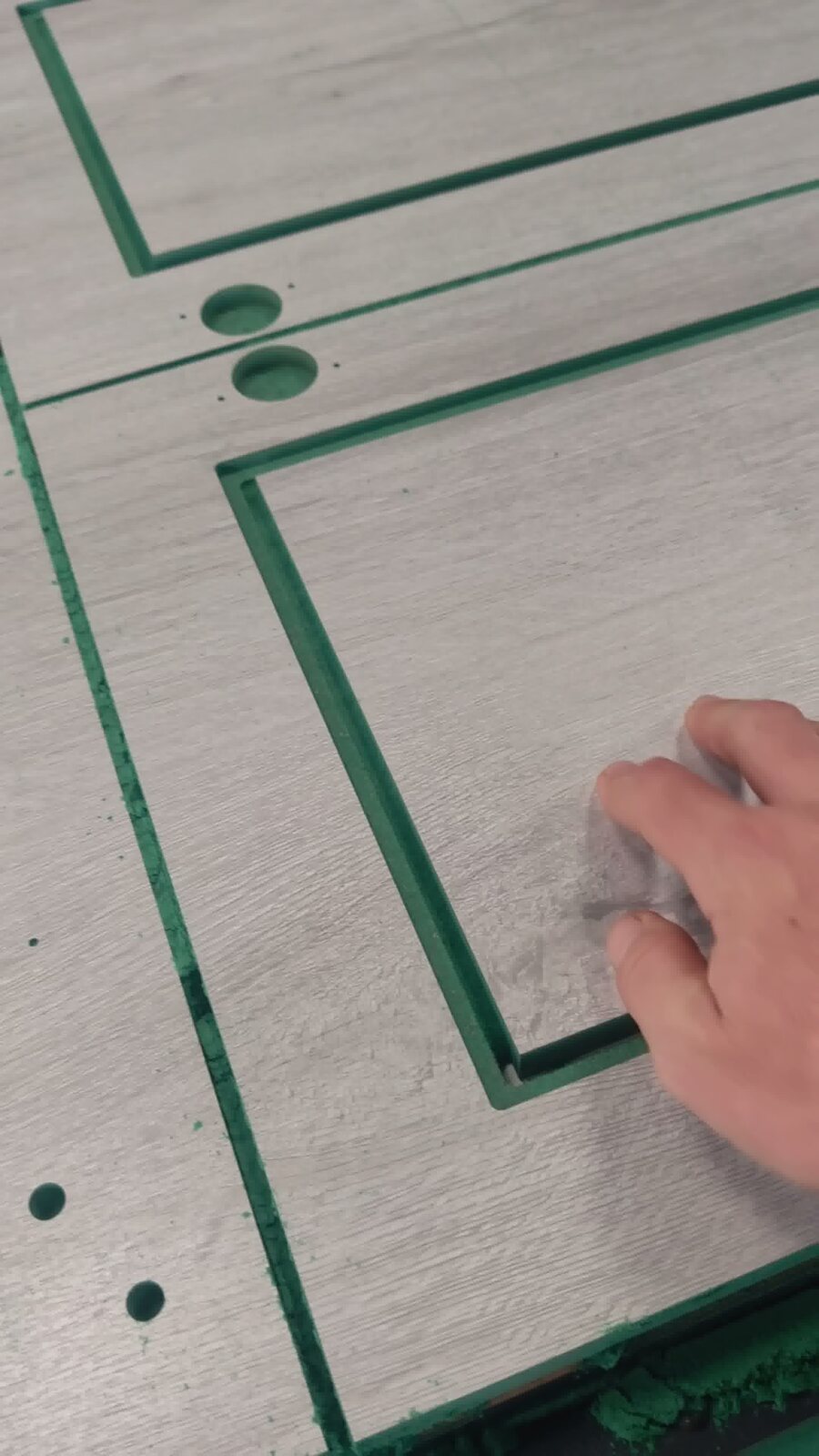
Protection matters beyond the visible front edge. Discuss pipe openings, worktop joints and the sink cut-out. Select sealing methods for the actual material and supplier instructions. A protective tray can ease cleaning but cannot stop a leak at its source.
Leave room for inspection
Avoid hiding connections behind fixed panels or filling every space with bottles. Check the system with the installer after fitting. If you notice damp smells or a wet edge, locate the cause, dry the area and assess the affected parts.
Keep this checklist
Check before ordering
- Valves and trap remain accessible
- Cut-outs are protected
- Leaks are easy to spot
Is moisture-resistant board enough on its own?
No. Suitable construction, protection of exposed areas and sound plumbing are all needed.